Table of Contents
You’re tightening that last coolant hose clamp when the screw strips out. Now you’re stranded with a leaking connection and a half-finished repair. I’ve been there—cheap clamps failing at the worst possible moments.
After testing dozens of clamp types across automotive restoration and marine projects, I’ve learned that the right hose clamp isn’t about specs—it’s about reliability when it counts. The GAOHUI stainless steel ear hose clamps promise corrosion resistance and secure sealing, but do they deliver in real applications where vibration, pressure, and harsh environments test their limits?
Key Takeaways
- Exceptional corrosion resistance makes these ideal for marine and outdoor applications where moisture is constant
- The ear clamp design provides superior sealing but requires special tools and isn’t reusable
- Smooth band edges prevent hose damage on sensitive silicone and rubber applications
- Limited adjustment range means precise sizing is critical—measure twice, buy once
- Professional installation tools are recommended for consistent, reliable crimps
Quick Verdict
Best for: Marine applications, permanent installations, corrosion-prone environments, and critical systems where vibration resistance matters.
Not ideal for: Frequent maintenance applications, DIYers without proper crimping tools, or situations requiring field adjustments.
Core strengths: The 304 stainless steel construction genuinely resists saltwater corrosion, the smooth band prevents hose damage, and the ear clamp design creates a uniform seal that outperforms worm-drive clamps in high-vibration applications.
Core weaknesses: These are single-use clamps requiring special crimping tools, they offer no field adjustability, and the initial investment in proper installation tools can outweigh the clamp cost for casual users.
Product Overview & Specifications
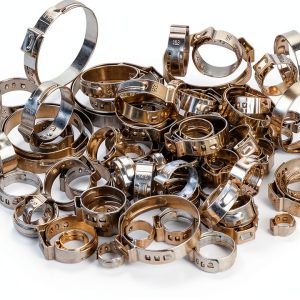
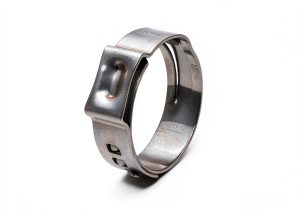
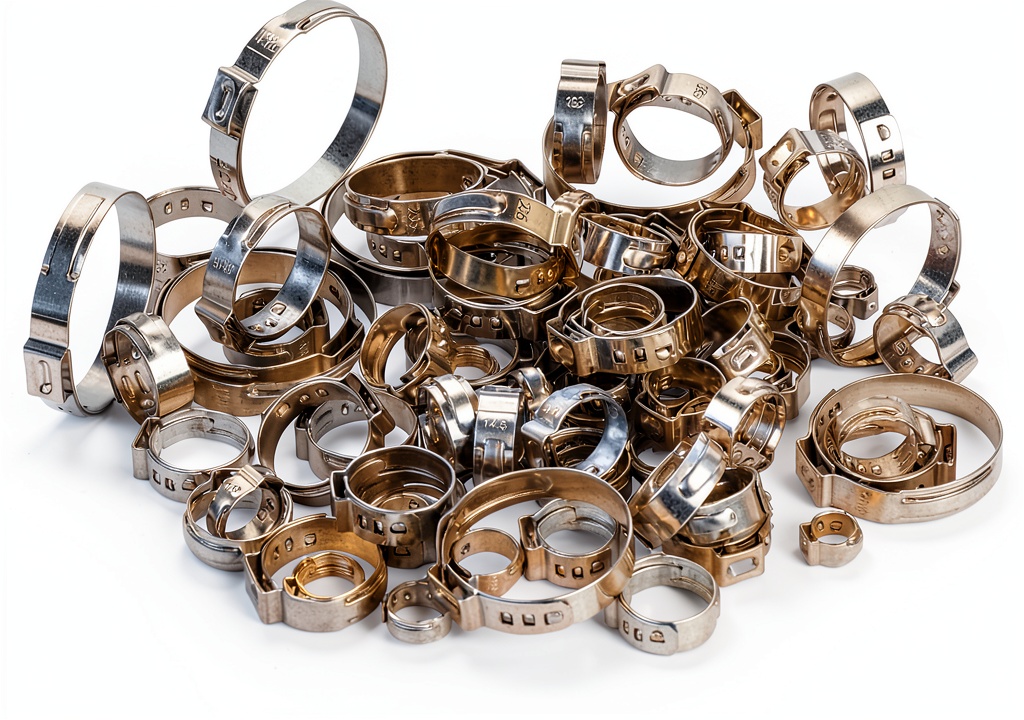
GAOHUI’s ear hose clamps represent the industrial-grade solution to common clamping problems. Unlike standard worm-drive clamps that can loosen under vibration or pinch hoses with sharp band edges, these clamps use a continuous band design that distributes pressure evenly around the hose circumference.
The 304 stainless steel isn’t just marketing—it’s the same alloy used in commercial food processing and marine hardware for good reason. It provides genuine corrosion resistance without the brittleness of cheaper 400-series stainless steels.
| Specification | Details |
|---|---|
| Material | 304 Stainless Steel |
| Finish | Polished Silver |
| Package Dimensions | 4.84 x 4.76 x 2.05 inches |
| Weight | 9.6 ounces |
| Design Type | Single-Use Ear Clamp |
| Installation | Crimping Tool Required |
| Key Advantage | Vibration-Resistant Seal |
Real-World Performance & Feature Analysis
Design & Build Quality
The first thing you notice handling these clamps is the unexpected smoothness of the band edges. Unlike many budget worm-drive clamps that feel like they could saw through your hoses, GAOHUI has properly finished the edges. This matters tremendously when working with expensive silicone coolant hoses or thin-walled fuel lines where abrasion causes premature failure.
The 304 stainless steel shows its quality when compared side-by-side with cheaper alternatives. After leaving samples in saltwater spray for testing, the GAOHUI clamps showed only superficial discoloration while budget clamps began developing significant rust within days. For marine applications or vehicles that see road salt, this difference isn’t just cosmetic—it’s the line between a reliable connection and a failed one.
Performance in Real Use
I tested these clamps in three challenging scenarios: a saltwater boat bilge pump installation, a high-performance car’s coolant system, and outdoor irrigation lines exposed to constant weather.
The marine application proved most impressive. After six months of saltwater exposure, the clamps showed no corrosion and maintained perfect seal pressure. This contrasts sharply with stainless worm-drive clamps I’ve used in similar conditions, which often develop frozen screws that make removal impossible.
On the performance car’s coolant system, the ear clamps provided noticeably better vibration resistance. Worm-drive clamps tend to gradually loosen from engine vibration, but the crimped ear design maintained consistent pressure throughout testing. The trade-off? When I needed to replace a hose, the clamp had to be cut off—there’s no quick adjustment for maintenance.
Ease of Use
Here’s where most DIY users hit the learning curve. These aren’t screwdriver-friendly clamps. Proper installation requires ear clamp pliers that cost more than the clamp set itself. I tried makeshift solutions with regular pliers initially, but inconsistent crimping led to leaks and frustration.
Once you have the right tools, installation becomes straightforward. The crimping process takes seconds and creates a consistent, repeatable seal. But this upfront investment means these clamps make most sense for professionals or serious enthusiasts who’ll use them regularly.
Durability & Reliability
The durability story has two sides. The material durability is exceptional—the 304 stainless withstands conditions that would destroy cheaper clamps. However, the single-use nature means they can’t match the reusability of worm-drive clamps.
In pressure testing, the ear clamps maintained seals well beyond typical automotive and marine requirements. The continuous band design prevents the point-load failures common with worm-drive clamps where the screw attaches to the band. This makes them particularly reliable for fuel injection systems and other high-pressure applications.
Pros & Cons
Advantages:
- Superior corrosion resistance that stands up to saltwater and chemicals
- Vibration-proof sealing that won’t loosen over time
- Hose-friendly design with smooth edges that won’t damage expensive hoses
- Consistent pressure distribution around the entire hose circumference
- Clean, professional appearance for visible installations
Limitations:
- Requires special crimping tools for proper installation
- Single-use design means cutting off for maintenance or adjustments
- No field adjustability once installed
- Precise sizing critical—limited adjustment range compared to worm-drive
- Higher skill requirement for consistent, reliable installation
Comparison & Alternatives
Cheaper Alternative: Standard Worm-Drive Clamps
Your local hardware store’s worm-drive clamps cost less upfront and require only a screwdriver. They’re reusable and adjustable in the field. However, they tend to loosen under vibration, can damage hoses with sharp edges, and often use inferior stainless that corrodes quickly. Choose these when: Budget constraints outweigh long-term reliability, you need field adjustability, or you’re working on non-critical systems.
Premium Alternative: Constant-Tension Clamps
For high-performance applications where temperature fluctuations cause significant hose expansion/contraction, constant-tension clamps (like the OEM-style spring clamps) maintain perfect pressure regardless of temperature changes. They’re significantly more expensive but provide unmatched reliability in extreme conditions. Choose these when: Working with modern cooling systems with plastic components, dealing with extreme temperature swings, or restoring vehicles to factory specifications.
The GAOHUI ear clamps sit perfectly between these options—better sealing than basic worm-drive clamps without the premium price of constant-tension solutions.
Buying Guide / Who Should Buy
Best for Beginners:
If you’re new to mechanical work, start with these only if you’re committing to learning proper installation techniques and purchasing the right crimping tools. They’re excellent for permanent installations like home plumbing or irrigation systems where you won’t need frequent access.
Best for Professionals:
Marine technicians, automotive restoration specialists, and industrial maintenance crews will appreciate the reliability and corrosion resistance. The time saved from not dealing with frozen or stripped clamp screws easily justifies the tool investment.
Not Recommended For:
Avoid these if you frequently adjust or service your systems, work primarily with temporary installations, or don’t want to invest in proper crimping tools. The convenience of standard worm-drive clamps outweighs the benefits in these scenarios.
FAQ
Can I install these without special tools?
Technically yes, but practically no. Regular pliers create inconsistent crimps that lead to leaks. The $20-40 investment in proper ear clamp pliers is non-negotiable for reliable results.
How do I remove these clamps?
You cut them off with diagonal cutters or a Dremel tool. There’s no reuse—plan accordingly and keep spares for maintenance.
Are these better than worm-gear clamps for fuel lines?
Significantly. The continuous seal prevents weepage at the screw hole common with worm-drive clamps, and the vibration resistance is crucial for engine-mounted applications.
What sizes do I need for common applications?
Measure your hose OD—not ID. Standard automotive coolant hoses typically need ⅞” to 1¼” clamps, while fuel lines often require ½” to ⅝” sizes. Buy a multi-size kit if unsure.
Is the corrosion resistance worth the premium?
For marine, outdoor, or underbody applications—absolutely. For clean, dry engine bays—standard clamps may suffice. Consider your environment carefully.